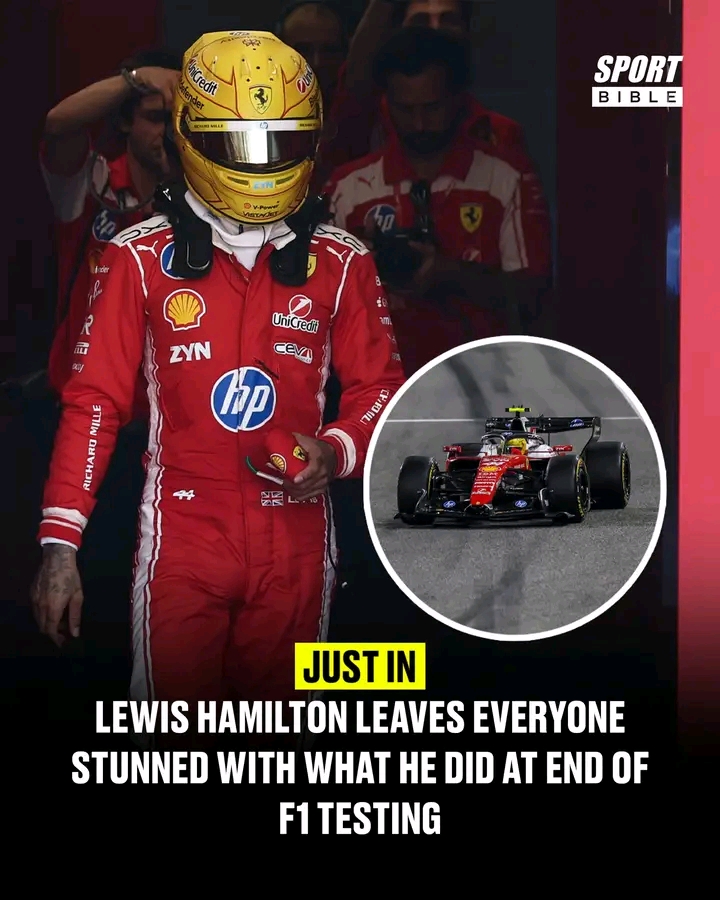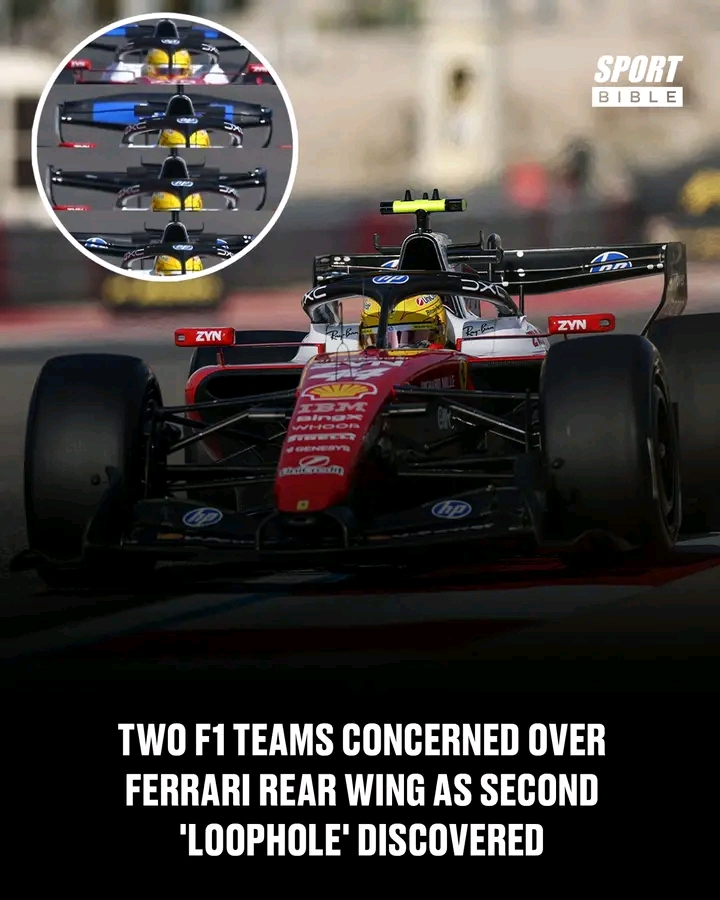
Fresh controversy has emerged in the Formula 1 paddock after two rival teams raised concerns over the rear wing design of , alleging a potential second regulatory “loophole” may have been uncovered. The issue, which reportedly centers on subtle aerodynamic flexing under high-speed conditions, has prompted renewed scrutiny from competitors eager to ensure strict compliance with the FIA’s technical framework.
The matter comes amid an increasingly competitive season in , where marginal aerodynamic gains can translate into significant on-track advantages. According to sources within the paddock, two teams have formally queried the legality of Ferrari’s rear wing assembly, suggesting it may exploit a grey area in load and deflection testing procedures. While no official protest has been lodged, discussions between team representatives and FIA technical delegates are believed to be ongoing.
At the heart of the concern is the way the rear wing behaves at speed. Although it appears to meet static load tests conducted in the garage, rivals suspect that aerodynamic forces encountered during racing conditions may cause controlled flexing that reduces drag on straights while maintaining downforce in corners. Such concepts are not new to the sport; similar debates have surrounded flexible bodywork in previous seasons, leading to mid-year clarifications and technical directives from governing authorities.
Ferrari, however, is understood to be confident that its design fully complies with existing regulations. Team insiders maintain that the rear wing passed all mandatory inspections and stress tests, emphasizing that innovation within the rulebook is a core part of Formula 1’s engineering philosophy. The FIA has not indicated that any rules have been breached, though it retains the authority to issue clarifications or amendments if it deems necessary.
The development adds another layer of intrigue to a championship battle already defined by razor-thin margins. As teams continue to push the limits of aerodynamic efficiency, scrutiny over technical interpretations remains inevitable. Whether the situation results in regulatory intervention or fades as a competitive sideshow, the episode underscores the relentless innovation — and suspicion — that characterizes the upper echelons of Formula 1.
About the Author