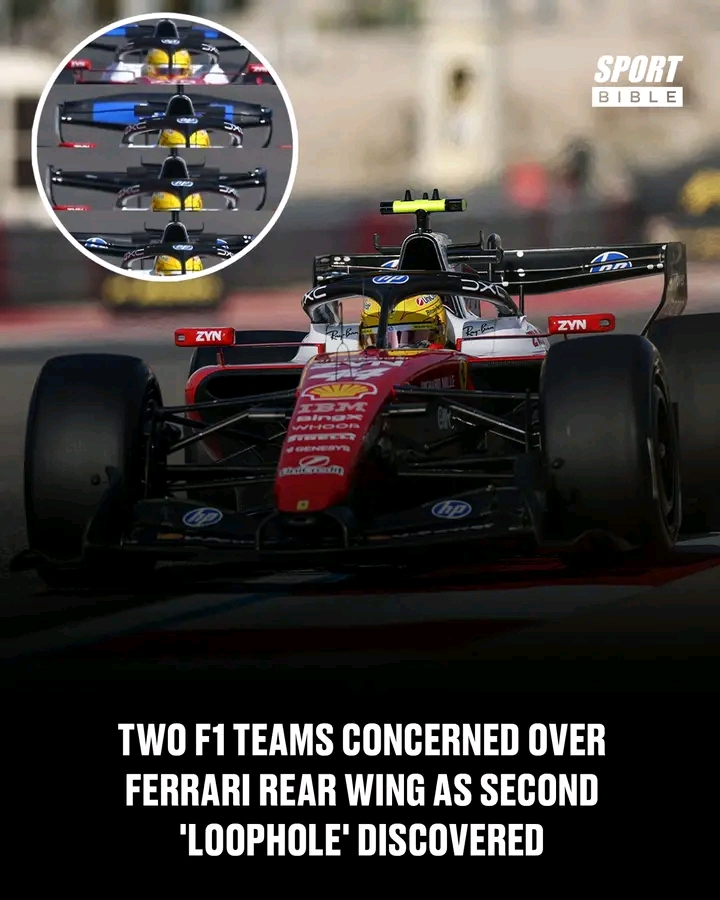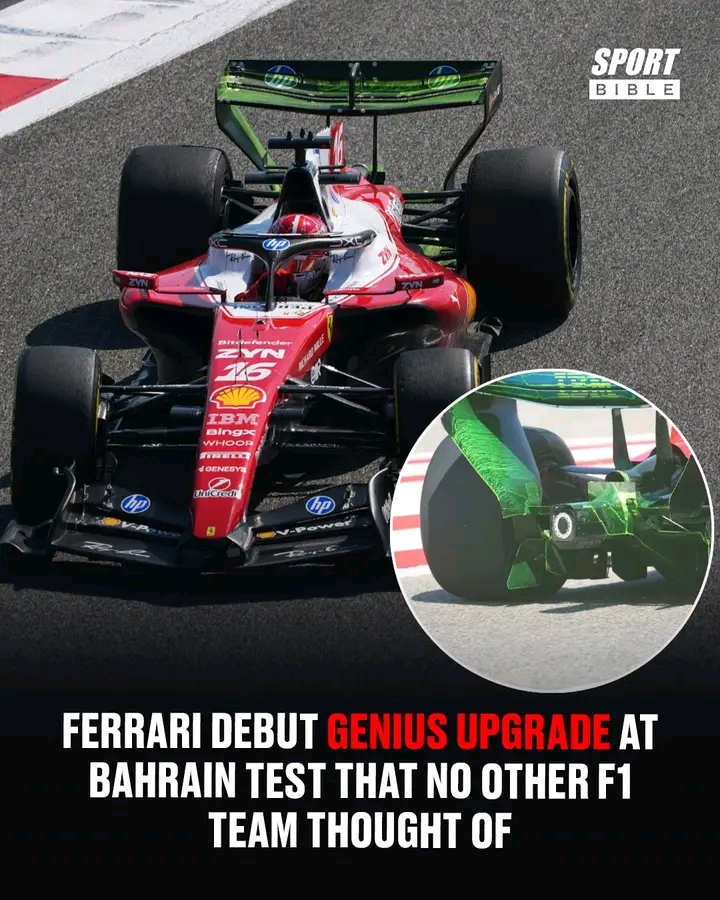
The opening pre-season test at the delivered the usual flurry of aerodynamic experiments and data-gathering runs, but it was who captured the paddock’s attention with an inventive upgrade that rivals had not anticipated. As teams worked through their programs under the desert sun, Ferrari quietly introduced a subtle yet potentially transformative development that engineers across the pit lane quickly began scrutinizing. The innovation underscored the Italian squad’s intent to regain a competitive edge in a championship fight that has grown increasingly technical and unforgiving.
At the heart of Ferrari’s update was a cleverly reworked airflow management solution integrated into the car’s sidepod and cooling architecture. While most teams focused on refining beam wings and floor edges to maximize ground effect stability, Ferrari’s engineers adopted a different philosophy—optimizing internal airflow pathways to enhance aerodynamic consistency without compromising straight-line speed. The design featured a refined inlet geometry and revised bodywork contours aimed at stabilizing rear-end balance, particularly under heavy load and high-speed cornering.
Early track data suggested the concept delivered immediate gains. Drivers reported improved rear stability and smoother traction application during long runs, crucial factors at a circuit known for stressing tires and braking systems. Observers noted that the car appeared more planted through Bahrain’s medium-speed sections, with less visible sliding compared to previous outings. Although lap times in testing are notoriously difficult to interpret, Ferrari’s consistency over extended stints hinted that the upgrade may have addressed one of the team’s persistent weaknesses from last season.
Rival teams, including reigning champions and resurgent challengers , were seen photographing and analyzing the Ferrari in the pit lane. Technical directors remained tight-lipped, but insiders suggested the innovation could prompt a wave of reinterpretations before the opening round. In the cost-cap era of Formula 1, introducing a performance gain without major structural redesign represents a significant strategic advantage.
While it remains to be seen how the upgrade performs under full race conditions when the season officially begins in Bahrain, Ferrari’s bold thinking has already reshaped the narrative of the test. In a sport where marginal gains define championships, originality can be as powerful as outright speed. If the early signs prove accurate, Ferrari’s Bahrain breakthrough may mark the first chapter in a renewed title campaign—one built not just on horsepower, but on ingenuity.
About the Author