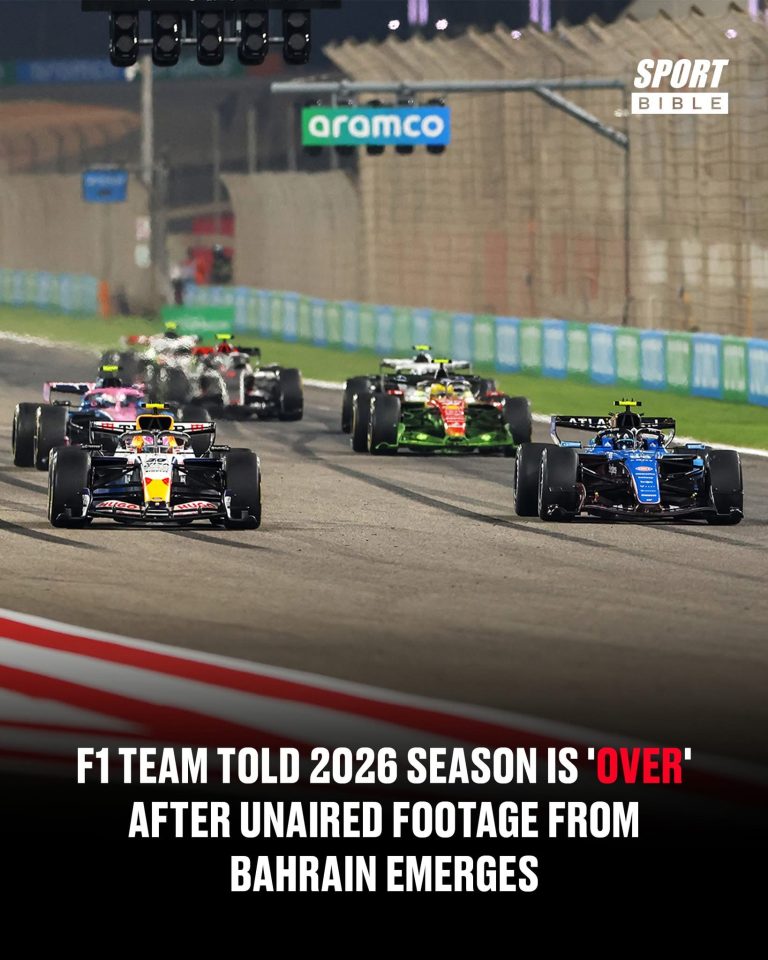
Fresh controversy has erupted in the Formula 1 paddock after previously unseen footage from pre-season running in Bahrain surfaced online, prompting claims that one team’s 2026 campaign could effectively be “over” before it has truly begun. The video, reportedly captured during private testing sessions at the venue, shows what analysts believe are fundamental issues with the team’s new power unit and chassis integration under Formula 1’s sweeping 2026 regulation changes.
The 2026 season marks a transformative era for the sport, with revised aerodynamic rules and a new generation of hybrid power units designed to increase electrical deployment and rely on fully sustainable fuels. Multiple outfits have invested heavily in preparation for the overhaul, including manufacturers such as , which is entering the championship as a full works operation, and established engine partners like , returning to a more prominent role. Against that backdrop, any early indication of technical shortcomings has amplified consequences.
According to technical insiders, the unaired Bahrain footage appears to show persistent instability under acceleration, along with cooling concerns that forced repeated garage returns. Observers claim the problems are structural rather than superficial, raising doubts about whether the team can realistically close the performance gap before the opening rounds of 2026. While no official statement has confirmed the scale of the issue, rival engineers reportedly described the situation bluntly, suggesting the outfit may already be too far behind in the development race.
The emergence of the footage has also reignited debate about cost caps and development restrictions. With financial regulations limiting in-season spending and wind tunnel usage, recovering from a flawed initial concept has become significantly harder than in previous eras. Teams such as and have previously demonstrated how difficult it can be to correct early design miscalculations under tight resource constraints, even with vast technical expertise at their disposal.
Despite the mounting speculation, figures close to the embattled squad insist that conclusions are premature. Pre-season data can be misleading, and Bahrain’s unique track characteristics do not always translate to broader calendar performance. Nevertheless, in a sport where momentum and early-season development set the tone for an entire campaign, the leaked footage has cast a long shadow. Whether the dire predictions prove accurate or overly dramatic will become clear only once the 2026 Formula 1 season officially roars into life.
About the Author