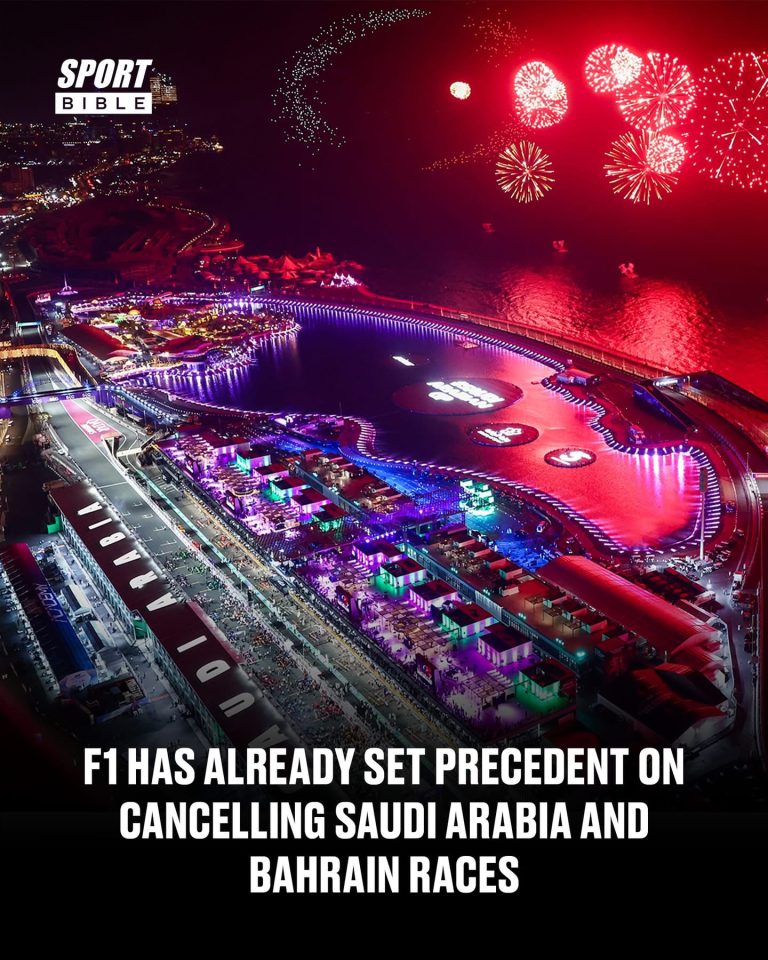
Formula 1 has previously demonstrated that it is willing to make decisive schedule changes when circumstances demand it, having already set a clear precedent regarding the cancellation of races in Saudi Arabia and Bahrain. The sport’s leadership has shown that safety, logistics, and global conditions can outweigh even long-planned events on the racing calendar.
In earlier situations, F1 officials carefully evaluated risks surrounding race weekends in the Middle East, ultimately deciding that postponement or cancellation was the most responsible course of action. These decisions highlighted the organization’s readiness to adapt quickly when external factors threaten teams, staff, or fans.
The precedent established by those actions continues to influence how Formula 1 approaches uncertain situations today. Teams and organizers now understand that no race is completely immune to cancellation if conditions fail to meet the sport’s operational or safety standards.
Such moves also reinforced Formula 1’s commitment to protecting its global reputation. By prioritizing stability and responsibility over rigid scheduling, the championship signaled that maintaining trust within the paddock and among supporters remains essential.
As discussions arise around future events, the earlier decisions involving Saudi Arabia and Bahrain serve as a reference point. They remind everyone involved that Formula 1 has already proven it is prepared to take bold steps when necessary to safeguard the sport’s integrity and participants.
About the Author