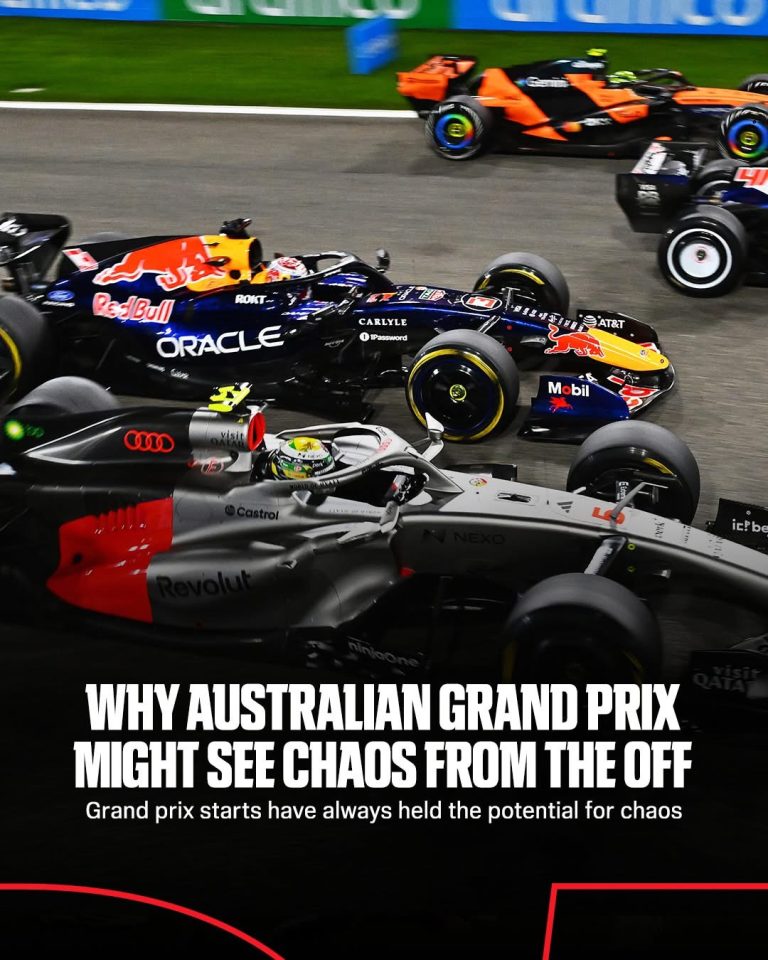
The opening moments of the Australian Grand Prix could bring immediate unpredictability, as race starts have long been known for producing intense and chaotic scenes. With every driver eager to gain positions before the field spreads out, the first few seconds often determine how the rest of the race unfolds.
At the start of any Grand Prix, cars launch closely together while drivers battle for limited space heading into the first corner. Heavy fuel loads and cold tyres reduce grip, increasing the chances of sudden incidents or misjudged moves that can quickly disrupt the order.
The Melbourne circuit adds another layer of difficulty, as its layout leaves little margin for error during the opening lap. Drivers must balance aggression with caution, knowing that one small mistake can trigger a chain reaction involving multiple competitors.
History has shown that early-race drama is not uncommon, especially when anticipation and adrenaline are at their highest. Even experienced drivers can struggle to avoid trouble when visibility is limited and split-second decisions must be made under pressure.
Because of these factors, fans and teams alike expect a tense start, where strategy, awareness, and composure will be crucial. The Australian Grand Prix once again carries the potential for chaos right from the moment the lights go out.
About the Author