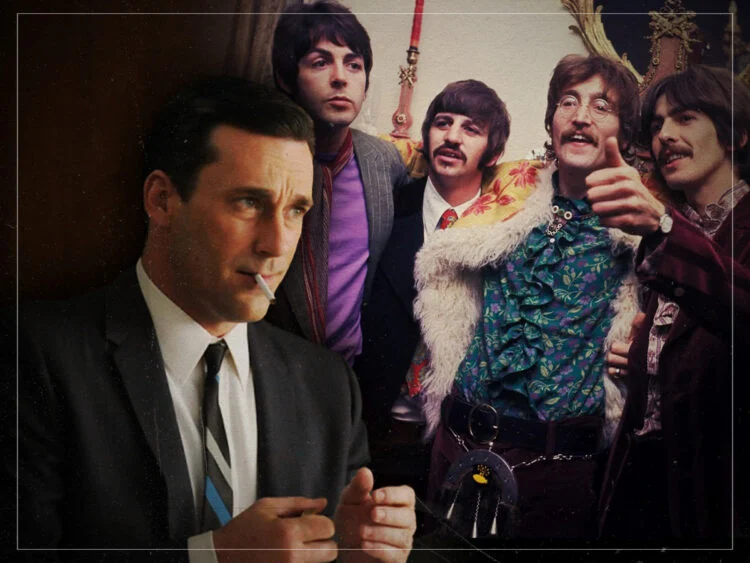
Since The Beatles’ catalogue finally arrived on streaming platforms about a decade ago, the band has felt more present in modern culture than ever before. Alongside this renewed accessibility, the group has also become a carefully managed commercial brand, with projects like Disney Plus documentaries reinforcing their official legacy. However, when it comes to licensing original Beatles recordings for film or television, Apple Corps remains extremely selective.Because of these strict controls, actual Beatles songs are rarely heard in movies or TV shows. Instead, soundtracks usually rely on cover versions, or creative workarounds like the film Yesterday, where the music is reinterpreted rather than presented in its original form. Using a genuine Beatles master recording is both unusual and expensive, often placing it out of reach for most productions.That rarity is what made the final scene of Mad Men’s 2012 episode “Lady Lazarus” so remarkable. Rather than a dramatic plot twist, the episode drew attention for featuring a full minute of the original 1966 recording of “Tomorrow Never Knows.” Despite the show being set during the height of Beatlemania in the mid-to-late 1960s, this was the first time an authentic Beatles track had appeared in the series.Showrunner Matthew Weiner later explained that the absence of Beatles recordings had always felt like a missed opportunity. To correct this, the producers agreed to pay $250,000 for the license, but money alone wasn’t enough. Apple Corps required full transparency, insisting on reviewing the script and understanding how the song would be used before granting approval.Weiner felt the effort was justified, describing “Tomorrow Never Knows” as revolutionary and perfectly suited to the moment. In the episode, the song underscores Don Draper’s growing disconnect from youth culture, as he briefly listens before dismissively lifting the needle. Despite the high cost, Weiner defended Apple Corps’ caution, emphasizing that their priority was protecting the band’s artistic legacy rather than maximizing profit.
About the Author