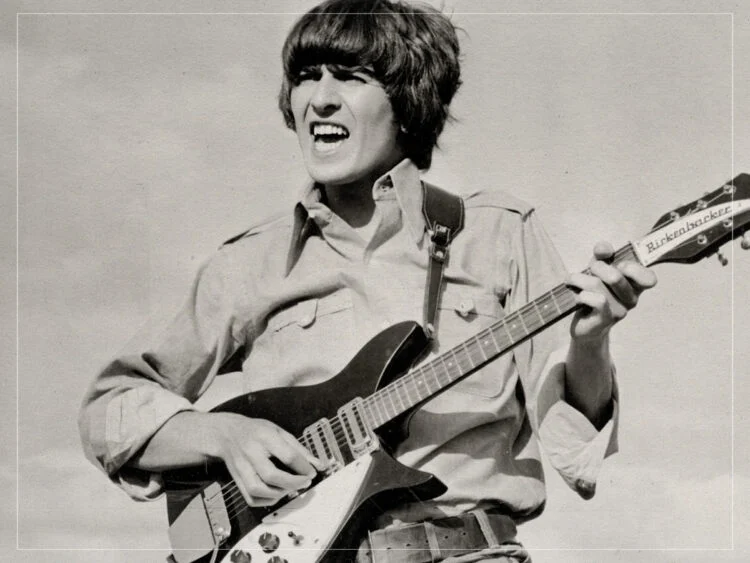
After returning from their deep dive into transcendental meditation, The Beatles found themselves overflowing with new material. Their time expanding their minds encouraged greater creative independence, with John Lennon and Paul McCartney increasingly writing separately rather than together. As the band regrouped to record demos, George Harrison arrived with a gentle, folk-leaning composition already prepared.The resulting sessions produced The White Album, one of the most diverse records in the band’s catalogue and the album that featured more George Harrison songs than any previous Beatles release. Despite classics like While My Guitar Gently Weeps making the cut, Harrison’s lighter track Not Guilty failed to reach a finished form during recording.Early versions of the song, later heard on the Anthology releases, reveal a sparse arrangement built around a steady acoustic guitar and Harrison’s calm vocal delivery. True to his reserved nature, Harrison never seemed fully committed to pushing the song as a Beatles release.Harrison later explained that the lyrics reflected his struggle to be heard within the band, particularly alongside Lennon and McCartney. Speaking to Rolling Stone, he described lines such as “Not guilty for getting in your way / While you’re trying to steal the day” as an expression of his attempt to carve out creative space. Written in 1968 after the band’s trip to Rishikesh, the song was recorded for The White Album but ultimately set aside when the sessions failed to capture it properly.Looking back, Harrison admitted he wasn’t entirely satisfied with the lyrics, feeling they were too tied to the moment and the criticism surrounding the band’s spiritual journey with the Maharishi. References to appearing strange, befriending Sikhs, and leading others astray reflected the backlash they faced after traveling to the Himalayas. Despite this, Harrison felt the melody had potential and even considered offering it to jazz-pop singer Peggy Lee, believing her voice would suit its sharp yet smooth character.Rather than revisiting it immediately, Harrison shelved the song until the 1970s, when he reworked it for his self-titled solo album. This later version was softer and more refined, aligning closely with the folk sounds of the era and standing in contrast to the rough original demo.Ultimately, Not Guilty signaled a shift in Harrison’s songwriting perspective. Instead of channeling frustration into heavier material—as he later did with Wah-Wah after tensions during the Let It Be sessions—this song offered a more reflective take on his role within the band. While Harrison often gave away songs to other artists, that generosity wouldn’t last long. Once free from The Beatles, he fully embraced his creative independence, with All Things Must Pass confirming his transformation into a powerful solo artist. Though The White Album was shaped by internal strain, Not Guilty quietly pointed toward Harrison’s future beyond the band.
About the Author